• GROW → RETAIN → PROTECT •


• GROW → RETAIN → PROTECT •
Certified Trichologist • Master Stylist • Educator
Root-Cause Hair + Scalp Health | Epigenetics
— HAIR LOSS + SHEDDING
Hair Loss Is Not One Thing.
Hair can shed. Density can decrease. Individual hairs can become finer. Growth patterns can change. And sometimes what looks like hair loss is actually breakage—or a combination of both.
Because before we ask what to do about hair loss, we need to understand what we're looking at.
Understanding what is changing is the first step toward understanding what may be influencing it.
Concerned About Your Hair? → Book a 15-Minute Consult
— DIFFERENT PATTERNS. DIFFERENT CONVERSATIONS.
Types of Hair Loss
Hair loss can develop in different patterns and through different mechanisms. Some forms affect the hair-growth cycle, some involve progressive changes to the follicle, and others may be related to inflammation, autoimmunity, repeated tension or behaviour.
There can also be underlying factors that contribute to increased shedding or changes in hair growth.
Understanding the pattern helps us ask better questions about what may be happening and what should happen next.
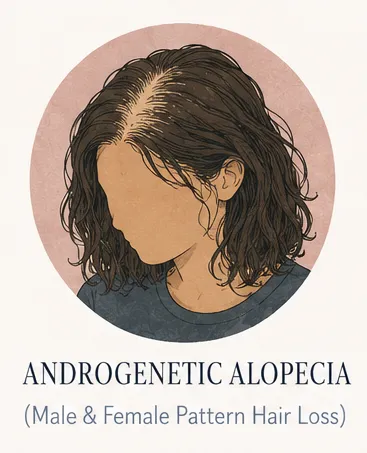
Androgenetic Alopecia / Pattern Hair Loss
Androgenetic alopecia, also known as pattern hair loss, usually develops gradually. You may notice your part becoming wider, your ponytail feeling smaller, or more scalp showing through than it used to. Genetics can create a predisposition to pattern hair loss, but having that predisposition does not necessarily mean it will present in the same way, at the same age, or to the same degree in everyone. Gene expression is influenced by a much bigger biological picture, including hormonal signalling, age, health, environment and other epigenetic influences. That’s why I look beyond genetics alone and consider the pattern, timeline and what may be influencing the follicle.
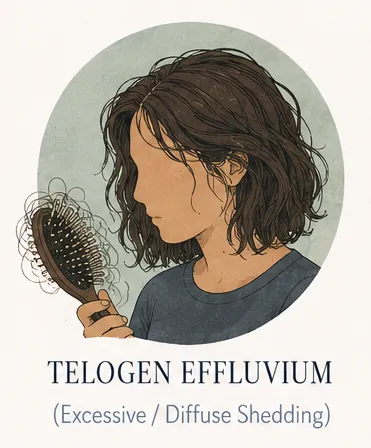
Telogen Effluvium
Increased shedding that occurs when more hairs than usual shift into the resting and shedding phases of the hair-growth cycle. It can become noticeable months after a triggering event, which is one reason connecting the timeline matters.
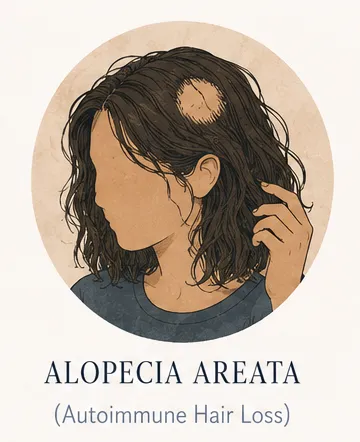
Alopecia Areata
An autoimmune form of hair loss where the immune system mistakenly targets the hair follicle, often causing smooth, round or oval areas of hair loss. While these patches are one of the more recognizable signs, alopecia areata doesn’t always look the same from person to person. The pattern, location and extent of hair loss can vary, which is why understanding what you’re actually seeing matters.
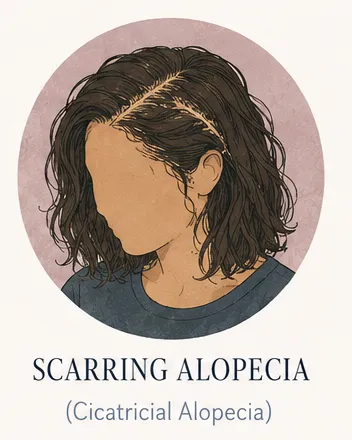
Scarring / Cicatricial Alopecia
A group of inflammatory hair-loss conditions in which hair follicles can become permanently damaged or destroyed. Early medical assessment is particularly important when a scarring alopecia is suspected.
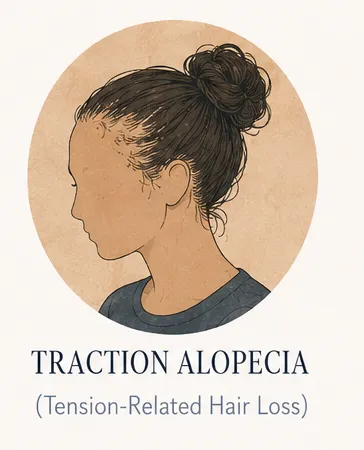
Traction Alopecia
Hair loss associated with repeated or prolonged tension on the hair and follicles, often related to hairstyles or styling practices. When recognized early, removing the source of tension may help prevent further damage; prolonged traction can lead to permanent loss.
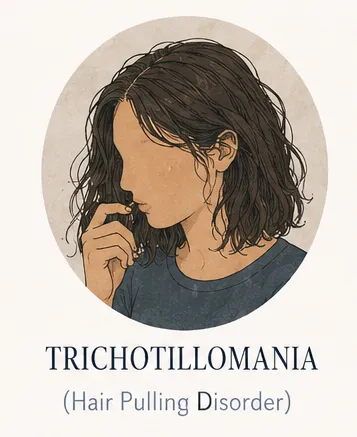
Trichotillomania / Hair-Pulling Disorder
A condition involving recurrent urges to pull out one's own hair, which can result in areas of broken hairs and hair loss. Because there is a behavioural and psychological component, appropriate support may extend beyond hair and scalp care.
— FACTORS THAT MAY CONTRIBUTE
Sometimes Hair Loss Is Part of a Bigger Picture.
Not every contributing factor is itself a type of alopecia. Hormonal, nutritional and health changes can influence the hair-growth cycle or contribute to shedding and changes in hair quality.
That distinction is important.
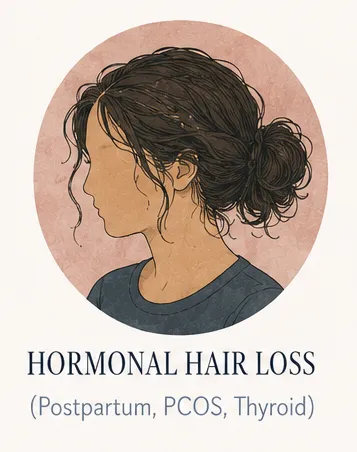
Hormonal + Endocrine Changes
Changes associated with postpartum recovery, menopause, PCOS, thyroid disorders and other endocrine factors may influence hair growth or shedding. The pattern, timing and wider health context help determine whether medical investigation may be appropriate.
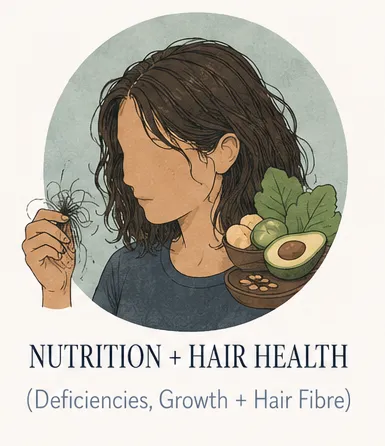
Nutritional Deficiencies + Hair
Nutritional status can influence normal follicle function and hair-fibre formation. When a deficiency is suspected, the goal isn't to blindly supplement—it is to determine whether further nutritional or medical investigation is warranted.

Do you experience any of the following?
✖︎ Hair loss or thinning
✖︎ Hair not growing
✖︎ Breakage, dryness, or split ends
✖︎ Limp, dull, or lack luster
✖︎ Itchy, flaky, or oily scalp
Let’s uncover the root cause together.
Don’t Miss a Beat in Your Hair Health Journey Check out The Hair Wire
Real education. Real support. Real results.
Subscribe to our YouTube Channel for real-time lessons in trichology, scalp health, and the science behind your hair and scalp, understanding your hair shouldn’t be a mystery.
Subscribe to our YouTube Channel for real-time lessons in trichology, scalp health, and the science behind your hair and scalp, understanding your hair shouldn’t be a mystery.
DISCLAIMER
Transparency matters here. Some products, services, or resources shared on this website may include affiliate links, which means I may earn a commission if you make a purchase through them, at no additional cost to you. Recommendations and opinions remain my own. Please see our Affiliate Disclosure and General Disclaimer for more information.
RESOURCES
COMPANY
FOLLOW @kerrijarrett


© 2026 Kerri Jarrett. All Rights Reserved.