• GROW → RETAIN → PROTECT •


• GROW → RETAIN → PROTECT •
Certified Trichologist • Master Stylist • Educator
Root-Cause Hair + Scalp Health | Epigenetics
━ The Work
BEFORE THE SOLUTION,
UNDERSTAND THE PROBLEM.
Shedding can be mistaken for breakage.
Breakage can look like poor growth.
Scalp symptoms can be treated without understanding the pattern.
And hair loss can get all the attention while the hair you still have becomes damaged.
Too often, we change the product before we understand the problem.
Notice something. Buy something. Try something. Repeat.
But another product isn't always the answer.
Sometimes the first step is simply understanding what you're seeing.
━ Hair is rarely just about hair
My Approach to Hair
& Scalp Health
HAIR DOESN’T EXIST IN ISOLATION.
Your scalp, follicles and hair fibre are connected.
So are genetics, health, environment and everyday hair care. That is why I look beyond one symptom. And beyond one product, treatment or quick fix.
As a Certified Trichologist and Cosmetologist, I bring two disciplines together. I consider what may influence the hair as it grows. I also consider what happens after it leaves the scalp.
I use epigenetics as an additional lens to explore how genetics, environment and lifestyle may interact over time.
Because growing hair is only part of the conversation. Caring for the hair you already have matters too.
━ trichology and cosmetology
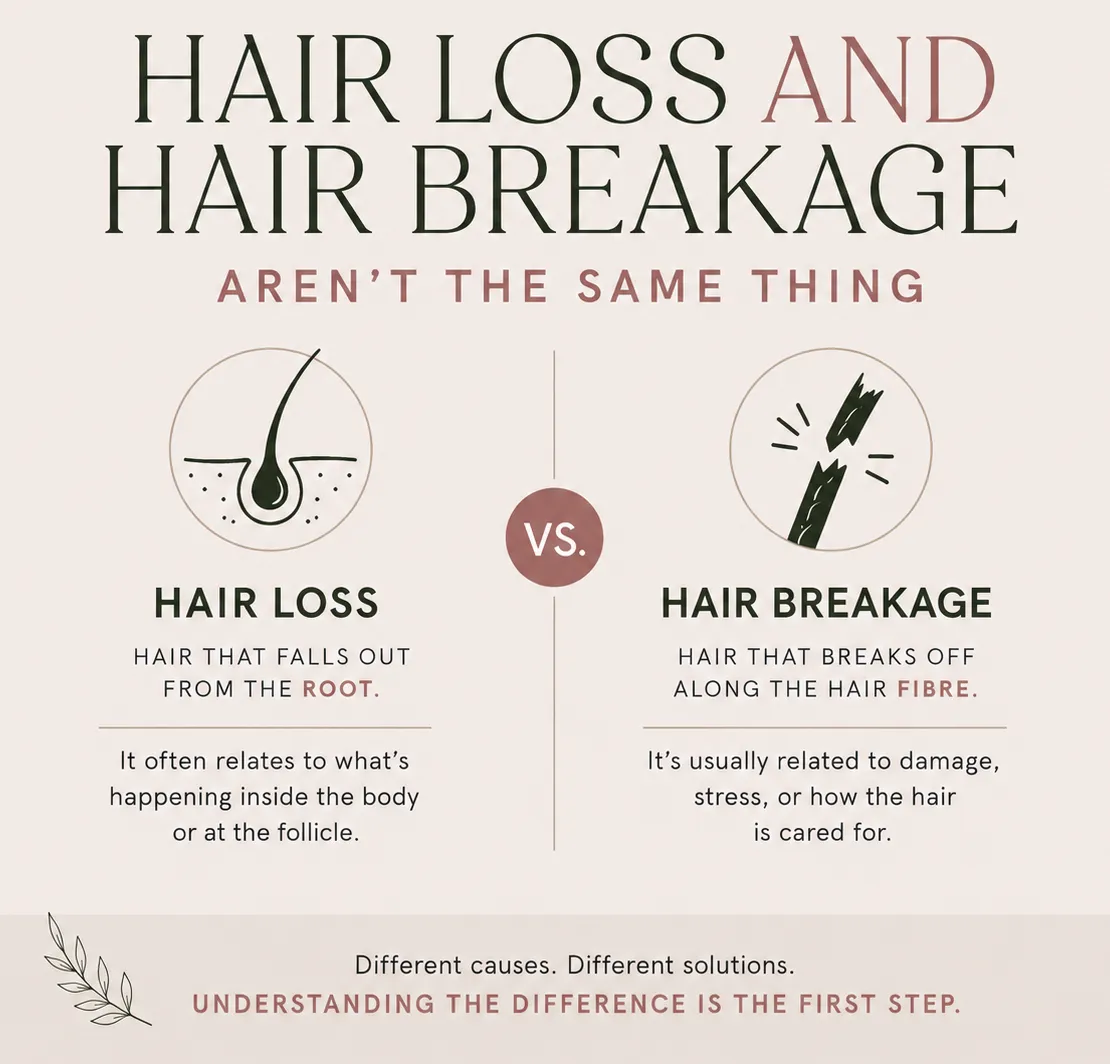
Hair Loss and Hair Breakage Are Not the Same Thing
Hair concerns rarely fit neatly into one box.
Hair shedding may be mistaken for breakage.
Breakage may look like poor hair growth.
Scalp symptoms may be treated without understanding their pattern.
And products often get changed before the problem is understood.
Notice something. Buy something. Try something. Repeat.
But another product isn't always the answer.
Sometimes the first step is understanding what you're seeing.
— FIVE AREAS. ONE CONNECTED APPROACH.
Where Trichology Meets Cosmetology
Then explain simply that you're looking at things such as the concern and timeline, scalp, shedding/loss pattern, density/diameter, hair fibre, hair-care practices and relevant health/lifestyle context.
And this is where I'd introduce trichoscopy.
That word isn't visible anywhere in these screenshots, and I think that's a missed opportunity because it's part of what makes your assessment concrete rather than vague wellness language.
Understanding the type, pattern and timeline of hair loss or shedding.
The environment from which your hair grows.
Understanding the hair-growth cycle and what may influence it.
Understanding breakage, condition, texture and damage.
Caring for the hair you have while supporting the hair you're growing.
— OBSERVATION COMES FIRST.
Before trying to fix something, we need to understand what we're looking at.
When did the change begin?
Is the hair shedding or breaking?
What is happening on the scalp?
What changed beforehand?
How is the hair being cared for?
Sometimes one observation means very little.
Several observations together can tell a different story.
Observation is where everything begins →


━ Your Hair Has Context.
Genetics and biology matter.
So can health, environment, behaviour and hair-care practices.
This is also where epigenetics adds another lens.
Epigenetics helps us explore how genetics and environment may interact over time.
But the goal isn't to find a hidden explanation for everything.
Sometimes hair breaks because it has been overprocessed.
Sometimes shedding follows a physiological stressor.
Sometimes genetics play a significant role.
Sometimes several things are happening at once.
The goal isn't to force an explanation. It's to ask better questions.
Explore Epigenetics →
━ Ready to understand your hair differently?
Less Guessing. More Understanding.
My role is to help you understand what you’re seeing, recognize patterns, identify what may deserve further investigation, and protect the hair you already have. It also means recognizing when another professional should become part of the conversation.
Trichology → scalp, follicle, loss and growth
Cosmetology → fibre, condition, care and manageability
Epigenetics → another lens for understanding influences and patterns
Hair and scalp consultations are available on location throughout St. Albert and surrounding areas, with virtual consultations available where appropriate.
Because when you understand your hair, you can make better decisions about it.
Book a Hair + Scalp Consultation →
Explore Hair + Scalp Health →
DISCLAIMER
Transparency matters here. Some products, services, or resources shared on this website may include affiliate links, which means I may earn a commission if you make a purchase through them, at no additional cost to you. Recommendations and opinions remain my own. Please see our Affiliate Disclosure and General Disclaimer for more information.
RESOURCES
COMPANY
FOLLOW @kerrijarrett


© 2026 Kerri Jarrett. All Rights Reserved.