Androgenetic Alopecia
Androgenetic Alopecia
Genetic Hair Loss Is More Than Just Your Genes
Androgenetic alopecia, also called male or female pattern hair loss, is one of the most common forms of hair loss I see. And it’s also one that I think gets oversimplified far too often.
Someone notices their part getting wider, their temples changing or their crown looking a little thinner, and eventually they hear some version of, “Well, hair loss runs in your family.”
And sometimes it does.
But that doesn’t mean the conversation should end there.
One of the things I want people to understand about genetic hair loss is that having a genetic predisposition does not automatically mean you are destined to experience hair loss in exactly the same way as someone else in your family.
Your genetics matter, absolutely. But they are one part of a much bigger picture.
What Is Androgenetic Alopecia?
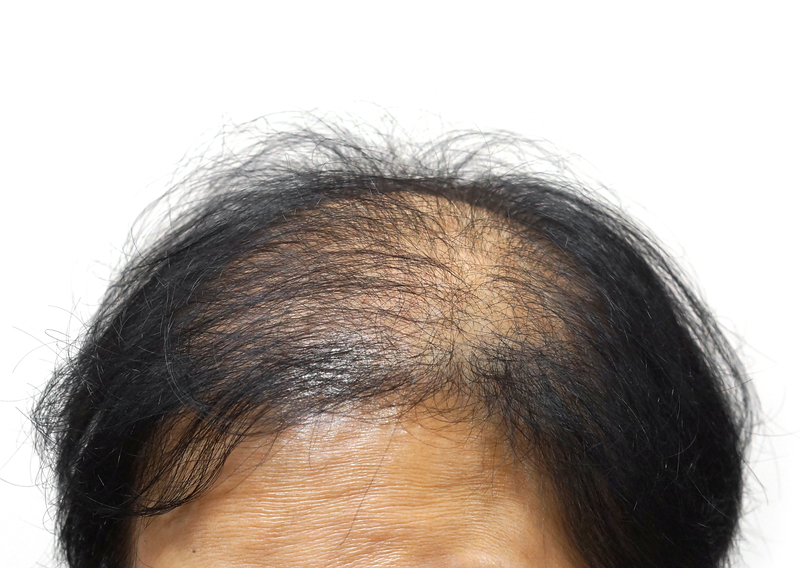
Androgenetic alopecia is a progressive type of hair loss involving genetically susceptible hair follicles and androgen activity. Over time, affected follicles can begin producing finer and shorter hairs through a process called miniaturization. The growing phase of the hair cycle becomes shorter and the diameter of the hair being produced gradually decreases.
This is why pattern hair loss doesn't always begin with obvious bald areas.
Often, people tell me their hair simply doesn't feel the way it used to. Their ponytail feels smaller. Their part seems wider. They can see more scalp when they're standing under bright lights. Their hair doesn't seem to grow as long or feel as full as it once did.
In men, we often see changes around the temples, frontal hairline and crown. In women, it may present more as diffuse thinning through the top and central part of the scalp, sometimes creating what has traditionally been described as a “Christmas tree” pattern.
But hair loss doesn't always read the textbook before deciding how it's going to show up.
That is why I don't want to look at one photograph and immediately tell someone they have androgenetic alopecia. I want to look at the pattern, the timeline, the scalp, the density and diameter of the hair, whether miniaturization is present and what else has been happening.
Because sometimes what looks like genetic hair loss from the bathroom mirror isn't quite that simple.
And No, It Isn't Just “Too Much DHT”
This is probably one of the biggest oversimplifications around genetic hair loss.
You'll often hear that androgenetic alopecia happens because someone has “too much DHT.”
DHT, or dihydrotestosterone, absolutely plays an important role. It is produced from testosterone and can bind to androgen receptors within susceptible hair follicles. But the important part of that sentence is susceptible hair follicles.
It isn't necessarily as simple as having high testosterone or high DHT.
How the follicle responds matters too.
This is particularly important in women because pattern hair loss can occur even when systemic androgen levels appear normal. So when someone tells me, “My hormones were tested and they're normal, so it can't be hormonal or genetic,” I don't consider the conversation finished.
Hair biology is rarely that tidy.
Genetic Predisposition Is Not the Same as Genetic Destiny
This is where the conversation becomes much more interesting to me.
Androgenetic alopecia is polygenic, meaning there isn't one single “baldness gene.” Multiple genes are involved, and they can be inherited from either side of the family. So the old idea that you simply look at your mother's father to find out whether you're going to lose your hair doesn't really hold up.
But even knowing that you carry a genetic predisposition doesn't tell me everything I want to know.
I want to know whether that predisposition appears to be expressing itself, how it is progressing and what else may be influencing the environment around that follicle.
This is where my work in epigenetics fits into the way I look at hair.
Epigenetics is essentially the study of how gene activity can be influenced without changing the DNA sequence itself. I sometimes explain it this way: your genetics may load part of the gun, but they don't necessarily tell us the entire story of when, how or to what degree that genetic tendency will be expressed.
That doesn't mean we can magically switch off a hair-loss gene. I don't believe in making those kinds of promises.
It means I don't think “it's genetic” is a good enough reason to stop asking questions.
What was happening when the thinning became noticeable? Has something changed hormonally? Has there been illness, surgery, medication changes, significant nutritional changes, chronic inflammation or another physiological stressor? What is happening with the scalp itself?
These things don't necessarily cause androgenetic alopecia, and that distinction matters. But they may affect the hair cycle, contribute to additional shedding or influence how noticeable or manageable an existing pattern becomes.
That's a very different conversation from, “Your dad is bald, so you're going bald too.”
Sometimes There Is More Than One Thing Happening
This is probably one of the most important things I teach people about hair loss.
You can have more than one type of hair loss at the same time.
Someone can have underlying androgenetic alopecia and then experience telogen effluvium following illness, surgery, rapid weight loss, hormonal change, medication changes or significant physiological stress. Telogen effluvium typically produces more diffuse shedding, and the trigger can precede the shedding by weeks or even months.
Suddenly the person feels like they've lost half their hair and assumes their genetic hair loss has rapidly progressed.
Maybe it has.
But maybe something else has been layered on top of it.
And if we don't stop to figure that out, we can end up treating the wrong thing.
This is also why I'm careful with the word stress. Stress can absolutely affect the hair cycle, but “you're stressed” isn't a diagnosis either.
I want to know what kind of stress we're talking about. Psychological stress? Illness? Surgery? Poor sleep? Major nutritional restriction? A hormonal transition? A medication change? Something inflammatory happening in the body?
And then I want to know when it happened.
Hair has a timeline. What you're seeing today may be telling us about something that happened months ago.
That's why the consultation matters so much.
Treatment Starts With Understanding What We're Treating
There are evidence-based treatments available for androgenetic alopecia, and depending on the individual, medical management may include options such as minoxidil or prescription medications that affect androgen pathways. Hair transplantation and cosmetic hair-density solutions may also be appropriate for some people.
Those conversations belong with the appropriate professionals, particularly where prescription medication or medical treatment is involved.
My role isn't to hand every person with thinning hair the exact same treatment plan.
My role is to help figure out what we're actually looking at first.
When I assess someone, I'm looking at their scalp and hair, but I'm also looking at the story around it. When did this start? How has it changed? Is there miniaturization? Is there excessive shedding? What is happening with the scalp? What does the hair fibre look like? What is the family history? What medications are being taken? Have there been changes in health, nutrition, hormones, stress or lifestyle?
That full health history matters in trichology because health conditions, medications, surgery and other physiological changes can influence the hair and scalp.
Trichoscopy gives me another layer of information because I can look much more closely at the scalp and hair and document what I'm seeing. We can measure changes in density and diameter, look for patterns of miniaturization and, importantly, establish a baseline so we're not relying entirely on memory six months later.
Sometimes that assessment points us toward supportive hair or scalp strategies.
Sometimes it tells me we need another professional involved.
And sometimes the most responsible thing I can say is, “There is something here that I think deserves further medical investigation.”
That's not passing someone off. That's good trichology.
Start With Understanding
If you're noticing a widening part, thinning crown, changing hairline, smaller ponytail or simply feel like your hair isn't what it used to be, you don't need to figure out your diagnosis before asking for help.
In fact, I'd rather you didn't spend three weeks comparing your scalp to photographs on Google and convincing yourself you have six different types of alopecia.
Start with what you know.
Something changed.
Now we need to understand what changed, when it changed and what the hair and scalp are actually showing us.
Hair loss can give us clues, but it doesn't always hand us the answer. That's where observation, assessment, timeline and the right questions become incredibly valuable.
Because before we start throwing treatments, supplements, serums and everything else at your hair, I'd rather understand what we're actually trying to support.
Understanding first. Solutions second.
Keep Exploring Hair Loss
Androgenetic alopecia is only one possible explanation for thinning hair. Telogen effluvium, alopecia areata, traction alopecia, scarring alopecia, hormonal influences, nutritional factors and other conditions can sometimes create changes that look surprisingly similar from the bathroom mirror.
And sometimes more than one thing is happening at once.
→ Explore All Types of Hair Loss
Concerned About Your Own Hair?
You don't need to know what type of hair loss you have before reaching out. That's part of what my Comprehensive Trichology Assessment is designed to help us understand.
I look at the pattern and timeline of your hair loss alongside your scalp health, hair growth, hair fibre, hair-care practices and relevant health and lifestyle context. The goal isn't to squeeze you into a one-size-fits-all answer. It's to understand the bigger picture, identify what may deserve further investigation and determine appropriate next steps for you.
→ Book a Complimentary 15-Minute Consultation
→ Explore the Comprehensive Trichology Assessment
Related Reading
Hormones + Hair Loss · Nutrition + Hair Health · Telogen Effluvium · What Is Trichoscopy?
Educational information only. This article is not intended to diagnose or treat androgenetic alopecia or any other medical condition. Hair loss can have multiple causes and may require assessment by a physician, dermatologist or other qualified healthcare professional. Medication decisions should always be discussed with the appropriate prescribing healthcare professional.


Let’s Talk Hair.
Hair loss. Scalp health. Hair growth. Hair fibre. Hair care. Get evidence-informed education, practical insights and new resources delivered to your inbox—designed to help you better understand what your hair and scalp may be telling you and make more informed decisions about what comes next. Because better questions lead to better answers.


