Alopecia Areata
Alopecia Areata: When Hair Loss Has an Autoimmune Connection
Alopecia areata is an autoimmune form of hair loss that can affect the scalp, face and other areas of the body. It's often described as “round patches of hair loss,” and while that can certainly be one of its more recognizable presentations, alopecia areata isn't always that straightforward.
And this is where I want to start.
When you notice an area of missing hair, the shape of the patch alone doesn't necessarily tell us what is happening.
Different forms of hair loss can sometimes look surprisingly similar from the bathroom mirror. Alopecia areata, traction, hair pulling, breakage and even some forms of scarring hair loss can create areas of reduced density. That is why I'm more interested in understanding the pattern, examining the hair and scalp, looking at what is happening around the follicle, and asking what else may have changed.
Because before we talk about treatment, we need to understand what we're actually looking at.
What Is Alopecia Areata?
Alopecia areata occurs when the immune system mistakenly targets the hair follicle and disrupts normal hair growth. It can happen at almost any age and affects people of all genders and backgrounds.
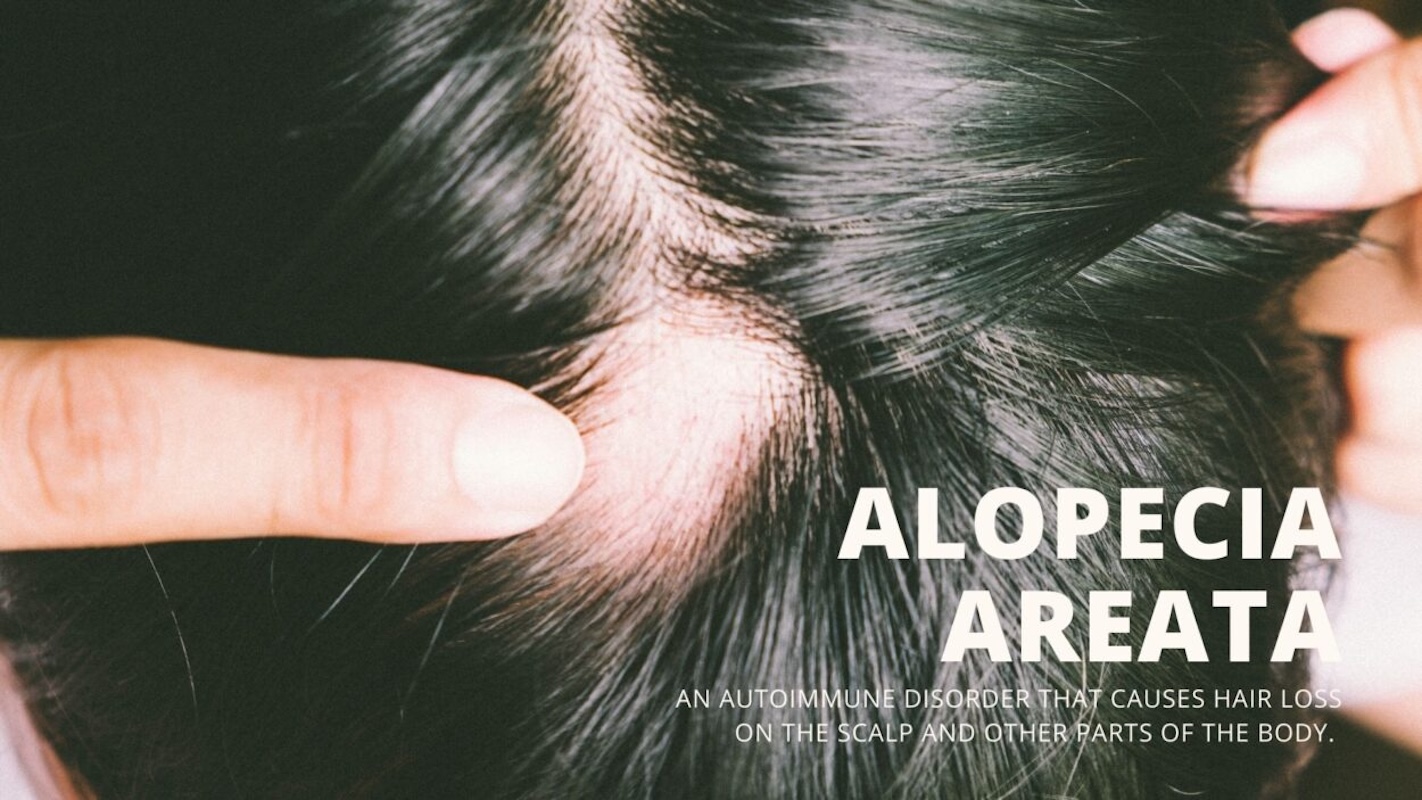
The classic presentation is one or more smooth, round or oval patches of hair loss on the scalp. But alopecia areata exists on a spectrum, and not everyone presents in exactly the same way.
For some people, a single small patch may eventually regrow. Others experience multiple patches, repeated episodes of loss and regrowth, or more extensive involvement. When all of the scalp hair is affected, it is known as alopecia totalis. When hair loss extends across the body, it is called alopecia universalis.
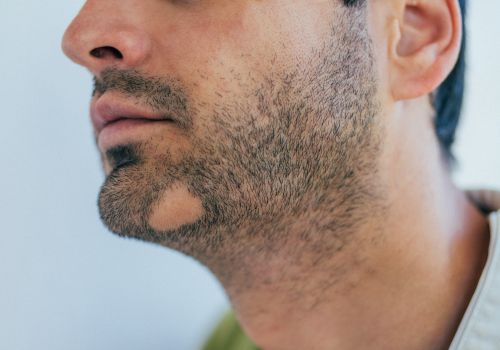
The eyebrows, eyelashes, beard and other body hair can also be affected.
This variability is one reason I don't like reducing alopecia areata to a photograph of a perfectly round bald patch. Real people don't always read the textbook.
Looking More Closely at the Hair and Scalp
One thing I pay attention to when assessing hair loss is not simply whether hair is missing, but what the hairs themselves are doing.
With alopecia areata, we may see characteristic changes in and around an active area of hair loss. Some hairs may become narrower closer to the scalp, creating what are commonly called exclamation mark hairs. Broken hairs, very short regrowing hairs and changes visible through trichoscopy can provide additional clues about what may be happening at the follicle.
That doesn't mean one feature automatically gives us a diagnosis.
It means we gather evidence.
I look at the pattern and location of the loss, the condition of the scalp, hair density, hair diameter, the hairs surrounding the area and whether there are signs suggesting active loss or regrowth. Trichoscopy lets us magnify what we're seeing and document it so we can compare changes over time.
Sometimes what appears to be “nothing happening” from the mirror looks quite different when we actually examine the follicle and emerging hair.
And sometimes what initially looks like alopecia areata turns out to deserve investigation in another direction.
That distinction matters.
Why Does Alopecia Areata Happen?
We don't have one simple answer.
Alopecia areata is an autoimmune condition, and genetics can influence susceptibility. Having a genetic predisposition, however, is not the same thing as knowing exactly if, when or how a condition will become active.
This is where conversations around environment, immune activity and epigenetics can become interesting, but also where we need to be careful not to oversimplify.
You may hear stress blamed for alopecia areata. Stress can influence immune and inflammatory processes in the body, and some people do report significant events around the time their hair loss begins. But that doesn't mean stress caused someone's alopecia areata, and it certainly doesn't mean they could have prevented it by relaxing more.
The human body is considerably more complicated than that.
When I take a history, I am interested in what was happening around the time the hair changed. I may ask about health changes, medications, illness, stress, nutrition, hormonal changes, family history and other relevant factors.
Not because every one of those things caused the hair loss.
Because hair doesn't exist in isolation.
Understanding the environment in which a change occurred gives us context, and context helps us ask better questions.
What Happens to the Follicle?
One important thing to understand about alopecia areata is that the follicle is generally still present.
The immune activity interferes with normal hair production and can push the follicle out of its usual growth pattern, but this is different from conditions in which the follicle itself is permanently destroyed.
That is why regrowth is possible.
And regrowth can be interesting to watch.
Early hairs may initially return finer or lighter in colour before gradually becoming thicker or more pigmented. The process isn't necessarily linear either. Hair can regrow in one area while another area becomes active.
This is another reason documentation can be so valuable. When you're looking at your hair every morning, small changes can be hard to notice. Measurements, photographs and trichoscopic images give us something more objective to compare.
Treating Alopecia Areata
Because alopecia areata involves the immune system, medical assessment is an important part of the conversation, particularly when the diagnosis is uncertain, hair loss is progressing or treatment is being considered.
Treatment depends on factors such as age, extent and location of hair loss, how active the condition appears to be, previous episodes and the individual's overall health.
Dermatologists may use treatments intended to reduce the immune activity affecting the follicle and encourage hair regrowth. Depending on the situation, these can include corticosteroid treatments and other topical, injected or systemic therapies. Newer immune-targeting medications have also expanded the treatment options available for some people with more extensive alopecia areata.
My role as a trichologist is different from your physician's or dermatologist's.
I'm not here to replace medical care.
My role is to help examine and document what is happening with the hair and scalp, understand the history and pattern, recognize when something deserves medical investigation, support the health of the scalp and remaining hair, and work alongside the appropriate healthcare professionals when needed.
Sometimes the most useful thing I can do is help someone understand which questions to ask next.
Hair Loss Is More Than What We See in the Mirror
Another part of alopecia areata shouldn't get pushed to the bottom of the conversation.
Losing your hair can be emotionally difficult.
Hair is tied to identity, culture, expression and how we recognize ourselves. Losing it suddenly, particularly when you don't know whether it will continue, stop or return, can be incredibly unsettling.
And while I spend a lot of time talking about follicles, biology and patterns, the person attached to the hair matters too.
Some people want to pursue every available option for regrowth. Others want help protecting and styling the hair they have. Some explore wigs, toppers, hair pieces, cosmetic solutions or changes to their haircut. Others eventually decide they don't want to hide their hair loss at all.
There isn't one correct response.
The goal is to give you enough understanding and appropriate support to make decisions that actually fit you.
Start With Understanding
If you're experiencing a sudden patch of hair loss, irregular areas of reduced density or changes you can't explain, you don't need to diagnose yourself from photographs online.
In fact, I'd rather you didn't.
Start with understanding what you're seeing.
Look at the pattern and timeline. Examine the hair and scalp. Ask better questions. And when the evidence points beyond the hair itself, bring the appropriate professionals into the conversation.
Hair loss tells us that something has changed, but it doesn't always tell us exactly what changed.
That's where observation, assessment and the right questions become so important.
Because before we decide what to do about hair loss, we need to understand what we're actually looking at.
Keep Exploring Hair Loss
Alopecia areata is only one possible explanation for hair loss. Different hair-loss conditions can look surprisingly similar from the bathroom mirror, and sometimes more than one thing can be happening at the same time.
→ Explore All Types of Hair Loss
You can learn more about androgenetic alopecia, telogen effluvium, traction alopecia, trichotillomania, scarring alopecia, hormonal influences, nutritional factors and other patterns in my Hair Loss Library.
Concerned About Your Own Hair?
You don't need to determine what type of hair loss you have before reaching out. That's part of what an assessment is designed to help us understand.
My Comprehensive Trichology Assessment looks at the pattern and timeline of your hair loss along with your scalp, hair growth, hair fibre, hair-care practices and relevant health and lifestyle context.
The goal isn't to squeeze you into a one-size-fits-all answer. It's to understand the bigger picture, identify what may deserve further investigation and determine the most appropriate next steps for you.
→ Book a Complimentary 15-Minute Consultation
→ Explore the Comprehensive Trichology Assessment
Related Reading
Androgenetic Alopecia + Pattern Hair Loss
Educational information only. This article is not intended to diagnose or treat alopecia areata or any other medical condition. Alopecia areata is an autoimmune condition and may require assessment and treatment by a physician or dermatologist. A trichology assessment can help examine and document the hair and scalp, identify patterns and support appropriate referral and collaborative care.


Let’s Talk Hair.
Hair loss. Scalp health. Hair growth. Hair fibre. Hair care. Get evidence-informed education, practical insights and new resources delivered to your inbox—designed to help you better understand what your hair and scalp may be telling you and make more informed decisions about what comes next. Because better questions lead to better answers.


