What Causes Hair Loss? 9 Common Types Explained
What Causes Hair Loss? Understanding the Different Types and What They May Be Telling You
Finding more hair in your brush, noticing your ponytail feels thinner, or seeing your scalp become more visible can be unsettling.
And naturally, the first question is usually, "Why is this happening?"
Is it stress? Hormones? Genetics? Something you're missing in your diet?
Maybe you've already tried switching shampoos, taking supplements, or buying a product that promises thicker hair.
But here's something I want you to understand.
Hair loss isn't one condition. It's a symptom or change that can have several different underlying causes.
And not every type of hair loss behaves the same way.
Some involve increased shedding. Others involve follicles gradually producing finer hair. Some are associated with inflammation, while others may be related to medical conditions, medications, or mechanical damage.
That's why identifying what's happening is so important.
Because the right approach begins with understanding the problem, not guessing at the solution.
First, Let's Understand How Hair Grows
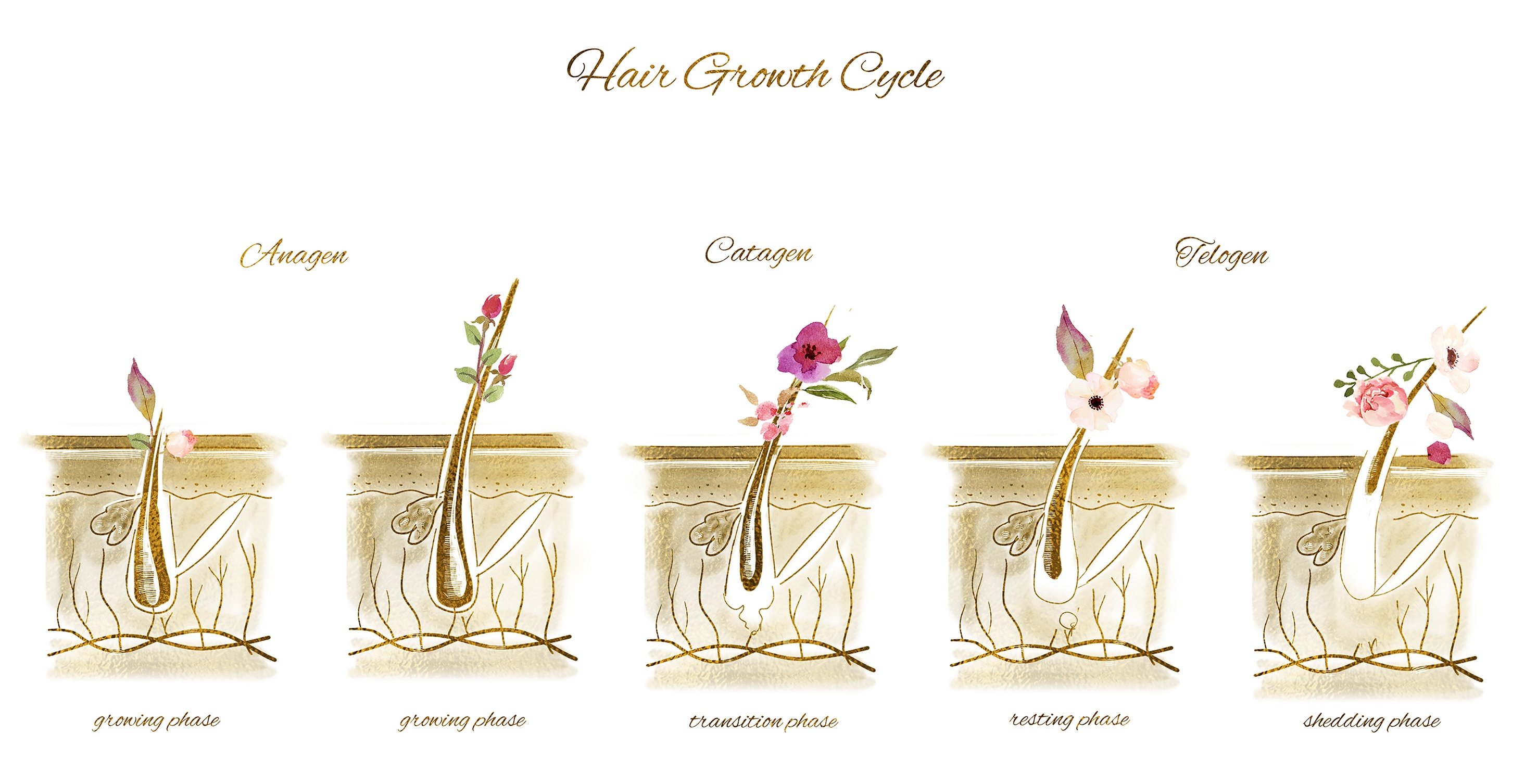
Before we talk about hair loss, it helps to understand that your hair is constantly moving through a natural growth cycle.
Each follicle operates through phases that include:
Anagen: The active growth phase, when the follicle produces a hair fibre.
Catagen: A short transitional phase as active growth ends.
Telogen: A resting phase before the hair is eventually released.
Exogen: The shedding process, when the hair fibre separates and falls away.
It's normal to shed hair every day.
You may have heard that losing approximately 50 to 100 hairs daily is normal. That's a commonly used estimate, but actual shedding varies between individuals and can be influenced by washing frequency, hair density, and other factors.
So seeing hair in your brush or shower doesn't automatically mean something is wrong.
What matters is whether you're noticing a change from your usual pattern.
1. Androgenetic Alopecia: Genetic Pattern Hair Loss
Androgenetic alopecia is one of the most common causes of progressive hair thinning.
You may know it as male-pattern or female-pattern hair loss.
It involves genetic susceptibility and changes in the way certain hair follicles respond to androgen signalling.
Over time, affected follicles can undergo a process called miniaturization.
This means they gradually produce finer, shorter, and less visible hairs.
Eventually, some follicles may produce very little visible hair.
What Does It Look Like?
In men, androgenetic alopecia often appears as recession around the temples, thinning at the crown, or both.
In women, it commonly presents as reduced density across the central scalp or a widening part, often with relative preservation of the frontal hairline.
But these patterns aren't absolute.
And here's something important.
You don't necessarily need to have abnormal hormone levels to experience androgenetic alopecia.
The sensitivity of your follicles and inherited biological characteristics can play a significant role.
Can It Be Treated?
There are evidence-based treatments that may help slow progression or improve hair growth in appropriate candidates.
These can include topical minoxidil and certain prescription medications, depending on the person's medical history and circumstances.
Earlier recognition can be beneficial because treatment is generally aimed at preserving and supporting follicles that are still capable of producing hair.
But treatment needs to be individualized.
2. Telogen Effluvium: When More Hair Than Usual Starts Shedding
Have you ever noticed significant shedding a few months after being sick, having surgery, giving birth, or going through a major life event?
One possible explanation is telogen effluvium.
This occurs when a greater proportion of follicles shift out of the active growth phase and subsequently shed.
And the timing can be confusing.
You might notice increased shedding two or three months after the event that contributed to it.
Potential triggers include significant illness, surgery, childbirth, rapid weight loss, nutritional restriction, and certain medications.
Does It Grow Back?
Acute telogen effluvium often improves once the underlying trigger has resolved, although recovery takes time.
Some people experience prolonged or recurring shedding, which may require further investigation.
And telogen effluvium can occur alongside other types of hair loss, including androgenetic alopecia.
This is one reason I don't like assuming that every person experiencing increased shedding simply has stress-related hair loss.
3. Alopecia Areata: When the Immune System Targets Hair Follicles
Alopecia areata is an autoimmune condition in which immune activity disrupts normal hair follicle function.
It often causes sudden, well-defined patches of hair loss.
But it can also present in other patterns and may affect eyebrows, eyelashes, or other body hair.
The course of alopecia areata can be unpredictable.
Some people experience spontaneous regrowth, while others have recurring or more extensive hair loss.
Is There Treatment?
Yes.
Depending on the severity and individual circumstances, treatments may include corticosteroids and other therapies that target the immune response.
For certain people with severe alopecia areata, prescription JAK inhibitors may be considered under specialist care.
Although there isn't a universal cure, there are treatment options, and research continues to advance.
4. Thyroid Disorders and Other Medical Conditions
Your hair follicles are influenced by the body's broader physiological environment.
Thyroid hormones, for example, are involved in many metabolic processes, including those relevant to hair follicle activity.
Both hypothyroidism and hyperthyroidism can be associated with changes in hair texture, growth, and shedding.
Other medical conditions, including some autoimmune and inflammatory disorders, can also contribute to hair changes.
But here's where I want to be careful.
Hair loss alone doesn't tell us that someone has a thyroid problem or another medical condition.
It's one possible clue that needs to be considered alongside other symptoms, history, and appropriate medical evaluation.
5. Nutritional Deficiencies and Hair Loss
Hair follicles are metabolically active structures.
Producing hair requires energy, amino acids, and an adequate supply of essential nutrients.
Significant nutritional deficiencies or inadequate dietary intake can affect hair production and shedding.
Iron deficiency is one factor that may be relevant, particularly in certain populations.
Other nutritional concerns may include inadequate protein intake or deficiencies in nutrients such as zinc.
Vitamin D status has also been studied in relation to several hair loss conditions, although an association doesn't automatically mean supplementation will restore hair growth.
And here's something I remind people regularly.
Taking more vitamins doesn't necessarily mean growing more hair.
If your nutrient levels are already adequate, additional supplementation may offer little benefit.
In some cases, excessive intake of certain nutrients can actually contribute to hair loss.
That's why testing and supplementation should be guided by individual needs rather than marketing claims.
6. Stress and Hair Loss
Stress is frequently blamed for hair loss.
And yes, significant physical or emotional stress can contribute to changes in the hair growth cycle.
But not every stressful period causes hair loss, and not every case of hair loss is stress-related.
The relationship between stress and hair biology involves complex interactions between hormonal, immune, and cellular signalling pathways.
It's not as simple as saying cortisol is high, therefore hair falls out.
When someone tells me their hair loss began during a stressful time, I want to understand what else was happening.
Was there illness? A medication change? Changes in nutrition? Sleep disruption? Significant weight loss?
The timeline matters.
And sometimes multiple contributing factors are present.
7. Traction Alopecia: When Tension Affects the Follicle
This is an important one, especially for people who regularly wear tight hairstyles, extensions, braids, or other styles that place tension on the hair.
Traction alopecia develops from repeated or prolonged pulling on the hair follicles.
Early signs may include tenderness, broken hairs, thinning along the hairline, or changes around areas exposed to tension.
If recognized early, reducing the traction may allow improvement.
But prolonged tension can eventually lead to permanent follicular damage.
A hairstyle should never require you to ignore persistent pain or pulling.
And if you're wearing hair extensions, the health and strength of your natural hair should always be part of the decision-making process.
8. Scarring Alopecia: Why Early Recognition Matters
Not all hair loss is reversible.
Certain inflammatory conditions can damage the hair follicle and replace it with scar tissue.
These are collectively known as cicatricial or scarring alopecias.
Examples include lichen planopilaris, frontal fibrosing alopecia, and central centrifugal cicatricial alopecia.
Symptoms can vary, but some people experience scalp burning, itching, tenderness, redness, scaling, or progressive areas of hair loss.
Others may have few noticeable symptoms.
These conditions require medical assessment, often by a dermatologist, because timely treatment may help limit further permanent loss.
This is why I never recommend simply waiting to see what happens when someone has unexplained progressive hair loss, particularly with scalp symptoms.
9. Is It Hair Loss or Hair Breakage?
Here's another distinction that often gets overlooked.
Sometimes people believe they're losing hair from the follicle when they're actually experiencing breakage along the hair fibre.
Heat styling, chemical processing, friction, and mechanical stress can weaken the hair shaft.
As the fibre becomes more fragile, it may break at different points along its length.
The result can be thinner-looking ends, uneven lengths, or the feeling that your hair has stopped growing.
But breakage and follicular hair loss are not the same thing.
They require different approaches.
And sometimes both are happening at once.
How Do You Know What's Causing Your Hair Loss?
This is where observation becomes valuable.
When I'm exploring someone's hair and scalp concerns, I want to understand the full picture.
When did the changes begin? Was the onset sudden or gradual? Is there increased shedding, progressive thinning, or visible breakage? Are there scalp symptoms? Has anything changed with health, medications, nutrition, or lifestyle?
A scalp and hair assessment, including trichoscopy when appropriate, can provide useful information about patterns and visible characteristics.
Depending on the findings, medical evaluation, targeted laboratory testing, or a scalp biopsy may be recommended.
But not everyone needs every test.
The goal is to investigate what is clinically relevant, not order everything simply because someone is losing hair.
Can Hair Loss Be Treated?
In many cases, there are options to manage hair loss, support regrowth, or slow progression.
But treatment depends on the underlying condition.
Androgenetic alopecia may benefit from established medical therapies.
Telogen effluvium often requires identifying and addressing a contributing trigger.
Alopecia areata may need immune-directed treatment.
Scarring alopecia requires timely medical management to help prevent further follicular destruction.
And hair breakage may improve with changes to chemical services, styling techniques, and fibre care.
There isn't one universal treatment that addresses every form of hair loss.
And that's exactly why understanding the cause comes first.
The Hair Coach Perspective: Your Hair Is Giving You Information
One of the reasons I find trichology so fascinating is that hair can reflect many different influences.
Genetics, hormones, immune activity, nutrition, health conditions, and everyday habits can all play a role.
But hair changes aren't a diagnosis on their own.
They're information worth exploring.
And sometimes the most important thing we can do is recognize what we don't yet know.
Because treating hair loss without understanding the type is a little like trying to fix a car without figuring out why the warning light came on.
You might get lucky.
But wouldn't it make more sense to investigate first?
Hair loss isn't one condition. And it shouldn't be approached with one solution.
Start With Understanding.
Kerri Jarrett
Certified Trichologist | Red Seal Hairstylist
The Hair Coach
Concerned About Hair Loss or Changes in Your Scalp?
If you're noticing increased shedding, thinning, breakage, or changes in scalp health, understanding what's happening is the first step.
Through The Hair Coach, I offer in-person and virtual trichology assessments to help explore your concerns, identify relevant patterns and contributing factors, and guide appropriate next steps, including medical referral when needed.


Let’s Talk Hair.
Hair loss. Scalp health. Hair growth. Hair fibre. Hair care. Get evidence-informed education, practical insights and new resources delivered to your inbox—designed to help you better understand what your hair and scalp may be telling you and make more informed decisions about what comes next. Because better questions lead to better answers.


